A church wedding in Georgia is not simply a religious ceremony — it is a profound spiritual experience within the walls of churches with a thousand years of history. Georgia adopted Christianity in 337 AD and is one of the oldest Christian nations in the world. Churches dating from the 5th to 11th centuries still stand here, and services continue to be held within them.
Requirements for a Church Wedding in Georgia
The Georgian Orthodox Church has specific requirements for couples wishing to marry in a church ceremony:
- Both partners must be baptized. At least one must be Orthodox. The other may be Roman Catholic.
- Baptism certificates are required.
- Valid passports for both partners.
- If either partner was previously in a church marriage — a document of ecclesiastical annulment is needed.
- Two witnesses (sponsors) are required — they must be baptized Orthodox Christians who hold the wedding crowns above the couple's heads.
Church Wedding vs. Civil Registration: What Is the Difference?
A church wedding does not have legal standing: for your marriage to be officially recognized, you must also complete a civil registration at the House of Justice. The good news is that both procedures can be done on the same day.
Tip: Schedule the civil registration for the morning and the church ceremony for the afternoon. This allows time for travel between locations and lets you split the photo session into two beautiful parts.

What to Prepare for the Ceremony
- Wedding rings — they will be blessed during the ceremony.
- Ceremonial candles — tall white candles, available for purchase at the church.
- Icons — Christ for the groom and the Virgin Mary for the bride.
- A white cloth (rushnik) — the bride and groom stand upon it during the ceremony.
- Prior arrangement with the priest — at least 2-3 weeks in advance.
With our "Church Wedding" package, we handle all the coordination: liaising with the church, arranging the schedule with the priest, preparing all ceremonial items, and managing the logistics.
Best Churches for a Wedding Ceremony
Sioni Cathedral, Tbilisi
The Sioni Cathedral (6th-7th century) is the principal historic church of Tbilisi, located in the heart of the Old Town. It houses the cross of Saint Nino, the woman who brought Christianity to Georgia. Its central location makes it easy to combine with a photo session through Old Tbilisi.
Tsminda Sameba (Holy Trinity Cathedral), Tbilisi
The main cathedral of Georgia and one of the largest Orthodox churches in the world. Standing 101 meters (331 ft) tall, its interior features frescoes, mosaics, and soaring vaults. Perfect for couples who want a ceremony filled with grandeur and majesty.
Svetitskhoveli, Mtskheta
A UNESCO World Heritage Site and one of the most sacred churches in Georgia. According to tradition, the robe of Christ is buried here. Mtskheta is just 20 minutes from Tbilisi, making Svetitskhoveli very convenient for a single-day itinerary.
Gergeti Trinity Church, Kazbegi
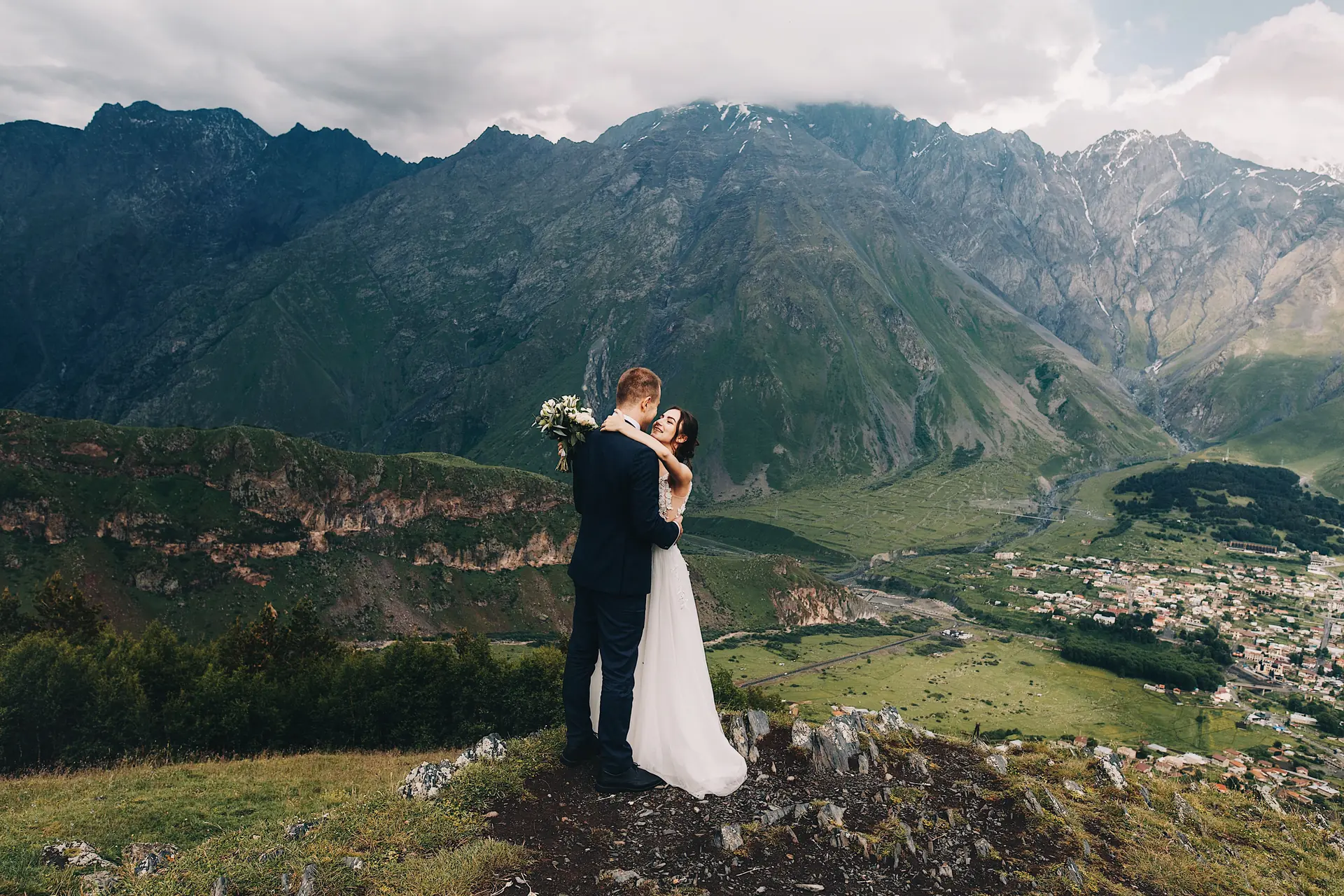
For the most adventurous — a church wedding at 2,170 meters (7,120 ft) above sea level, in a 14th-century church with Mount Kazbek as your backdrop. It requires special preparation, but the result is worth every effort.
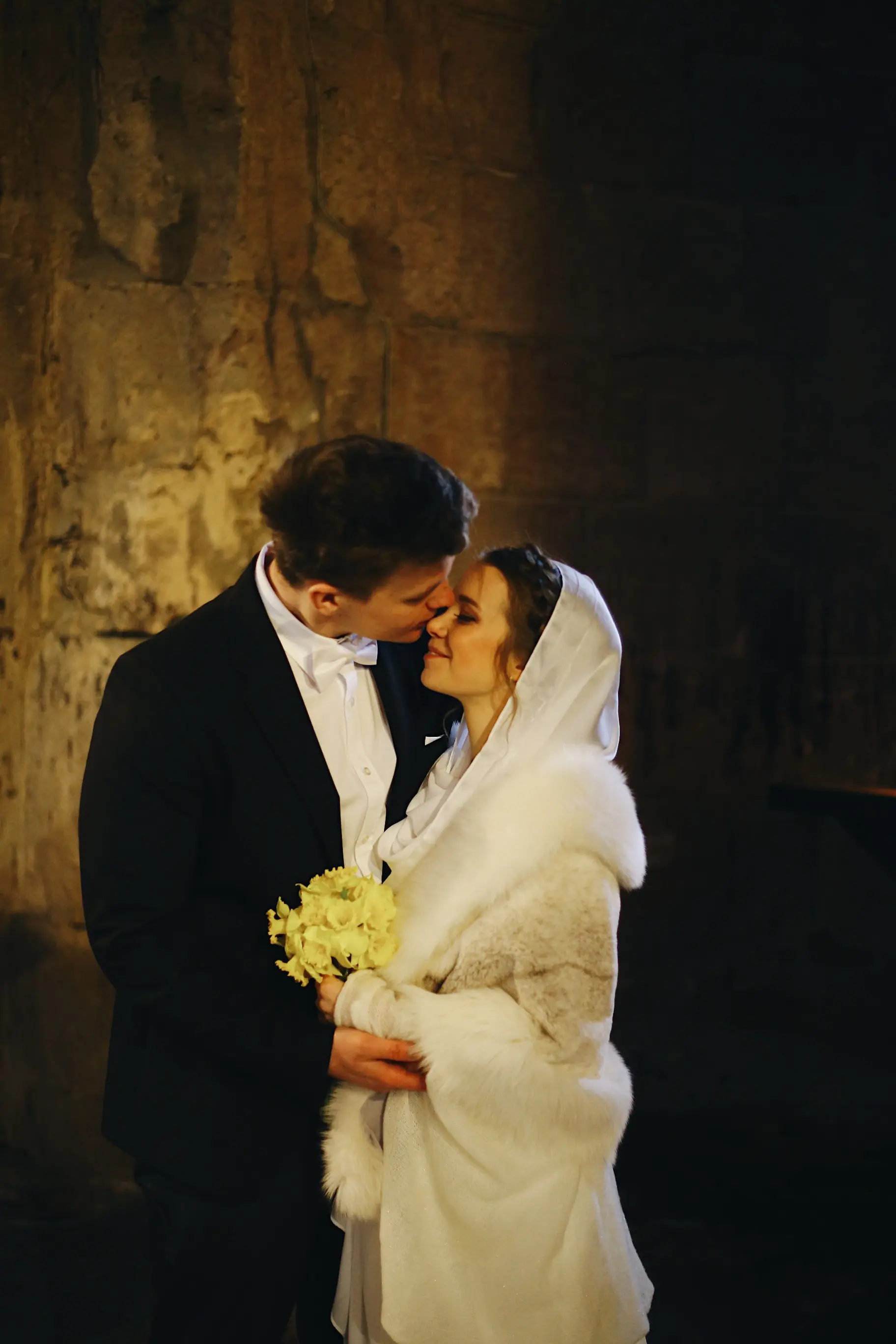
The "Church Wedding" Package from WedInGeorgia — $1,190
- Coordination with the church and priest
- Preparation of all ceremonial items: candles, cloth, icons
- Logistics coordination: transfers, scheduling, photographer
- Assistance with documents and baptism certificates
- Interpreter provided when needed
The church ceremony can be combined with any civil registration package (from $390), allowing you to complete both your legal marriage and your church wedding in a single day.
How the Ceremony Unfolds
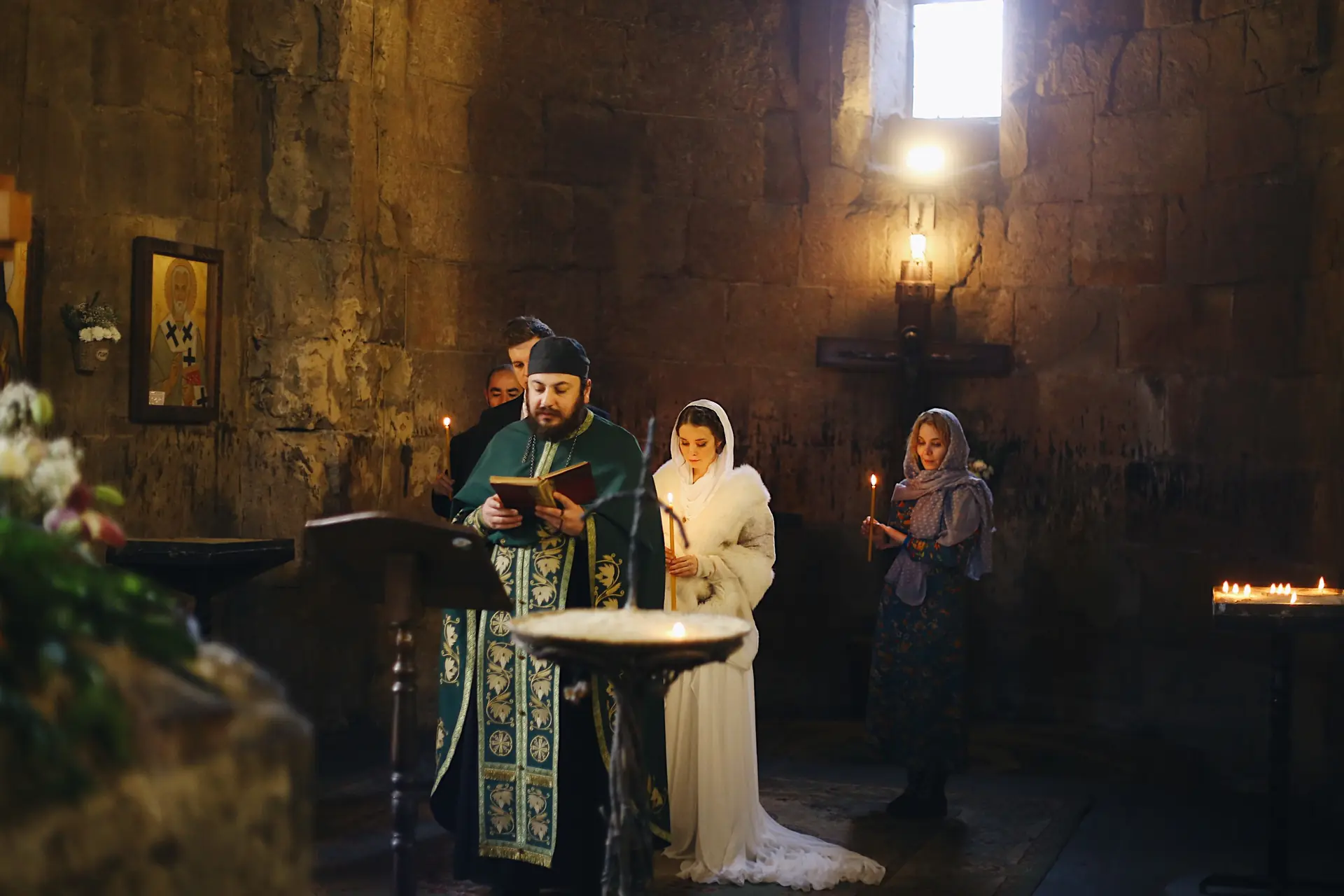
A Georgian Orthodox wedding ceremony lasts 40 minutes to one hour. It includes: the betrothal (exchange of rings), the crowning, the shared cup of wine, the procession around the lectern, and the final blessing. Throughout the ceremony, prayers and hymns are sung — Georgian polyphonic church singing is recognized worldwide as a UNESCO masterpiece.
Dress code: the bride wears a dress covering her shoulders and knees, with her head covered. The groom wears a suit. Guests dress modestly.
When to Plan Your Church Wedding
Church weddings are not performed during fasting periods or on Tuesdays, Thursdays, and Saturdays. The best months are May, June, September, and October. Begin planning at least 2-3 months before your desired date.
A church wedding in Georgia is a chance to begin your married life with a blessing in walls that have stood for a thousand years. Contact WedInGeorgia to discuss your ceremony.
Ceremony Steps: A Detailed Walkthrough
The Georgian Orthodox wedding is an ancient rite in which every element carries deep symbolism. Knowing the steps in advance will help you feel confident and present.
The Betrothal (Nishnoba)
The ceremony begins in the narthex of the church. The priest blesses the rings, places them alternately on the hands of the bride and groom three times, and then the betrothed exchange rings. The rings are placed on the ring finger of the right hand.
The Crowning
The central moment of the sacrament. The priest places crowns upon the heads of the bride and groom (or the sponsors hold them above). The crowns symbolize the Kingdom of Heaven: the couple is crowned for their shared journey. This is the most photographed moment of the ceremony.
The Shared Cup of Wine
The priest presents a cup of blessed wine. The bride and groom each take three sips in turn. The shared cup symbolizes that the couple will share everything equally — both joy and hardship.
The Procession Around the Lectern
The priest leads the bride and groom three times around the lectern (a small table bearing the cross and the Gospel). The circle is a symbol of eternity. During the procession, the choir sings troparia — ancient Georgian church hymns.
Removal of the Crowns and Blessing
The priest removes the crowns and recites the final prayer. After this, the couple shares their first kiss as a crowned married couple. The newlyweds then approach the Royal Doors to receive the priest's parting words of blessing.
What It Feels Like Inside a Georgian Church
You step into a church that may be five hundred or a thousand years old. The stone walls have absorbed centuries of prayers. Light falls through narrow windows, filling the space with a golden glow. The air carries the scent of incense and candle wax. When the Georgian polyphonic choir begins to sing — voices filling every corner — time itself seems to pause.
Many couples, even those who do not consider themselves particularly religious, say that the moment of the crowning brought them to tears. This is not simply a beautiful tradition — it is the sensation of becoming part of something ancient and eternal.
Photography During the Ceremony: Rules
- Photography without flash is permitted in most churches
- Video recording requires the priest's consent, usually from a stationary camera position
- The photographer must be dressed appropriately: long sleeves, knees covered, headscarf for women
- Entering the altar area and disrupting the priest are strictly prohibited
- Best shots: entering the church, the crowning moment, and the exit
- Drone photography near the church requires separate permission
What Guests Need to Know
Dress code: women must wear a skirt or dress below the knee, covered shoulders, and a headscarf. Men should wear long trousers and covered shoulders. Mobile phones must be on silent. Guests stand throughout the ceremony — Georgian churches do not have pews.
Costs: What Is Included and What Is Separate
- Donation to the church: 200-500 GEL (varies by church)
- Wedding rings: the couple brings their own or purchases them in Tbilisi
- Civil registration (required): from $390
- Full-day photographer (if not included in your package): from $250
- Celebration dinner: from $50 per person
Many couples combine the church ceremony with our "Premium" package ($1,490), which includes a photographer for 5 hours, dinner, and decor. A full day with registration, church wedding, photo session, and dinner starts from $2,600 for two.
Frequently Asked Questions
Can we have a church wedding if one of us is not Orthodox?
It is permitted if at least one partner is a baptized Orthodox Christian. The other may be Roman Catholic. Other denominations are considered on a case-by-case basis with the priest.
Does a church wedding replace civil registration?
No. A church wedding has no legal force. For an officially recognized marriage, civil registration at the House of Justice is required. Both ceremonies can easily be performed on the same day.
On which days are church weddings not performed?
During the four major fasting periods, during Cheese Week, during Bright Paschal Week, and on Tuesdays, Thursdays, and Saturdays. The exact dates change each year — we will help you select the right date.
Ready to start?
Let us plan your dream wedding
Free consultation, transparent pricing, full support. Get in touch — we'll reply within an hour.
Get a free consultation